Permits for wedding arches on Pinner High Street
Posted on 09/10/2026
Permits for wedding arches on Pinner High Street: a practical guide for couples, planners, and florists
If you are planning Permits for wedding arches on Pinner High Street, you are probably juggling a dozen moving parts already: venue timing, transport, flowers, photos, weather, and the general hope that everything runs smoothly. A wedding arch sounds simple enough on paper. In real life, though, once it moves onto a public street or pavement, the permit question arrives very quickly. And yes, that can feel like the annoying bit nobody mentioned at the start.
This guide explains how the permit process usually works, why it matters, what can trip people up, and how to make sensible decisions without turning a joyful day into a paperwork headache. We'll also look at practical planning points, common mistakes, and the kinds of details that matter on a busy local high street where access, safety, and tidy presentation all matter. If you want a wedding setup that looks beautiful and stays on the right side of local requirements, you're in the right place.
Why Permits for wedding arches on Pinner High Street Matters
A wedding arch is not just decoration. On a high street, it can affect public space, walking routes, vehicle access, shopfront visibility, and the overall flow of people. That is why permits for wedding arches on Pinner High Street matter more than many couples expect. You are not simply placing an item where it looks nice; you are introducing a structure into a shared environment.
That shared environment is the key point. Even a compact floral arch can create issues if it narrows a pavement, blocks a doorway, interferes with deliveries, or needs fixing into the ground. On a busy local street, those details are not background noise. They are the whole game, really.
Permits help ensure that the setup is considered, documented, and placed with the right level of care. They also protect you. If a venue, florist, planner, or supplier has checked the permission side properly, there is less risk of last-minute removal, awkward conversations with enforcement officers, or a rushed redesign on the morning itself. Nobody wants to be standing there at 8:45am with a half-built arch and a very stressed face.
In practical terms, this matters because wedding decor that touches public land usually needs more than good taste. It needs coordination. Sometimes that means a formal permit. Sometimes it means the venue already has permission for certain types of external dressing. Sometimes it means an alternative setup is smarter. The point is to find out early, not the week before.
There is also a simple reputational reason to take it seriously. A tidy, compliant installation makes the whole event look polished. Guests notice when the details feel calm and intentional. They also notice when cables are messy, the arch wobbles, or someone is trying to improvise with cable ties and hope. To be fair, hope is not a permit strategy.
How Permits for wedding arches on Pinner High Street Works
The exact process can vary depending on who owns or controls the space, but the logic is usually similar. First, you identify where the arch will sit. Is it fully inside a private venue boundary? Is it on the pavement? Does it touch a forecourt, entrance, or roadside edge? That distinction changes everything.
If the arch is entirely on private property, you may not need a public-space permit, though you may still need venue approval and insurance evidence. If any part of it sits in a public area, you should assume permissions may be needed until you know otherwise. That is the safer mindset and, frankly, the less embarrassing one.
For weddings around a busy local street setting, the process often involves some combination of the following:
- confirming the exact location and footprint of the arch;
- checking whether the pavement, verge, or frontage is public or private;
- reviewing the size, height, weight, and fixings of the structure;
- considering pedestrian flow and access for residents, traders, and emergency services;
- providing installation and removal times;
- supplying risk information, insurance details, or method statements where requested;
- agreeing who is responsible for putting it up, monitoring it, and taking it down.
In real terms, the permit process is often less about the romance of the setup and more about safety and responsibility. That may sound dry, but it actually helps the day run better. A well-planned arch tends to be cleaner, sturdier, and nicer-looking too.
If your arch includes flowers, ribbon, candles, fabric, signage, or a base that must be weighted, those details matter because they affect stability. A gusty afternoon on a main road is not the time to discover that a decorative feature was built on optimism alone. London weather, as you know, has a personality.
For suppliers dealing with wedding decor and floral design, it helps to think in layers: the visual design, the practical structure, and the permissions. When all three align, the result feels effortless. Effortless is the dream, even if behind the scenes there has been quite a bit of checking and measuring.
Key Benefits and Practical Advantages
Getting the permit side right brings a few clear advantages. Some are obvious, others become obvious only after you have seen a setup go wrong. Let's go through the useful ones.
- Lower risk of disruption: approved setups are less likely to be challenged or removed at the last minute.
- Better guest flow: the arch can be positioned in a way that still leaves room for people to move comfortably.
- Cleaner aesthetics: planning around the space usually creates a more balanced and intentional-looking result.
- Improved safety: proper fixings and clear responsibility reduce the chance of an unstable display.
- Less stress on the day: once permissions are sorted, everyone can focus on the actual wedding.
- Professional credibility: venues and suppliers tend to work more smoothly with people who have done their homework.
There is also a less tangible benefit: confidence. When you know the setup has been thought through, you stop second-guessing it every five minutes. That calm matters. Weddings run better when the team is not mentally firefighting.
For florists and planners, permission-aware design often leads to smarter choices. A slightly lighter structure, a freestanding frame, or a narrower footprint may be more practical than a grand, overbuilt arch that causes problems. And honestly, a thoughtful design often looks more elegant anyway.
If your wedding theme relies on flowers, you might also find it useful to compare the arch plan with other floral elements, such as wedding flowers in Pinner HA5. Sometimes the best result is not the biggest install, but the one that ties together the ceremony space and the rest of the day naturally.
Who This Is For and When It Makes Sense
This topic is relevant to several different people, and not just the couple getting married. In practice, permits for wedding arches on Pinner High Street can affect:
- couples planning an outdoor or semi-outdoor ceremony;
- wedding planners handling logistics and supplier coordination;
- florists creating floral arches, garlands, or entrance features;
- venue teams responsible for public-facing space;
- photographers who need to understand sightlines and timing;
- family members helping with set-up, especially where they think it will be "quick". It usually isn't.
It makes sense to focus on permits early if the arch will be anywhere near a pavement, roadside frontage, shared entrance, or public walkway. The same applies if you expect a crowd, want formal photographs outside the venue, or plan to place flower displays where people naturally pass by.
There are also situations where a permit may not be needed, but a careful check still is. For example, if the arch sits fully within private grounds, you may only need venue consent and a supplier risk assessment. Even then, there can be restrictions on height, fire safety, weight, or fixings. A quick chat upfront can save a lot of awkwardness later.
Truth be told, many wedding teams only ask about permissions once they have already fallen in love with the design. That is understandable, but not ideal. It is better to check the space first and design within the rules than to try forcing the rules around a dream arch that doesn't quite fit the setting.
Step-by-Step Guidance
If you want to handle this properly without overcomplicating it, use a simple sequence. Nothing fancy. Just a sensible, methodical approach.
- Pin down the exact location. Draw the arch position on a rough plan or ask the venue for a marked-up layout. Be specific. "Outside the front" is not enough.
- Clarify who controls the space. Private venue, shared entrance, street frontage, or public pavement? You need that answer before anything else.
- Measure the footprint. Width, depth, and height matter. So do any side pieces, plinths, weights, or floral extensions.
- Check the type of permission needed. This may be a venue consent, a highways-style permit, or another local approval depending on the exact location and setup.
- Prepare the supporting details. Expect to explain the installation time, removal time, materials, and how the arch will be secured.
- Ask about access and timing. Can the supplier load in early? Is there a delivery window? Will traders need clear access before opening hours?
- Confirm insurance and responsibility. Know who is responsible if the arch shifts, damages the surface, or needs urgent removal.
- Build in a weather plan. Rain, wind, and heat all affect flowers and stability. A backup plan is not dramatic; it is just sensible.
- Do a final pre-event check. Reconfirm times, contact names, and the exact assembly order 24 to 48 hours before the day.
A useful habit is to keep all approval notes in one folder or shared document. One email thread, one plan, one version. That avoids the classic wedding-day question: "Wasn't someone supposed to confirm that?"
If you are working with a florist, ask them whether they have experience designing for constrained or public-facing locations. A supplier who understands practical installation can often suggest easier floral options, such as lighter framing, modular sections, or arrangements that tie into a broader ceremony theme rather than trying to dominate the whole street.
Expert Tips for Better Results
Here is where experience tends to save the day. The best wedding arch installations are usually the ones that look calm, not the ones that scream for attention from across the road.
1. Design for the space, not against it. A smaller arch with strong styling can be more effective than an oversized structure that fights the setting. On a high street, proportion is everything.
2. Use freestanding construction where possible. This reduces reliance on ground fixings, which can be tricky in public or shared spaces. Freestanding frames also tend to be easier to remove quickly if needed.
3. Keep the base neat. Guests see the bottom of the arch almost as much as the flowers. Weighted bases, tidy coverings, and hidden supports make a big difference.
4. Watch the wind direction. It sounds simple, but it really matters. A floral display facing the wrong way can look lovely and still take a battering if the breeze funnels along the street.
5. Match the flowers to the installation window. If the arch will stand for several hours before the ceremony, choose blooms that can handle a bit of exposure. Your florist can advise on sturdier stems, hydration, and placement. That little practical conversation matters more than people think.
6. Leave room for photos. People will want to stand near the arch. Make sure the layout doesn't create a bottleneck. The best photographs happen when guests feel relaxed, not packed together like commuters before a train.
7. Keep decor intentional. If the arch already has a strong visual shape, too many extra props can make it look cluttered. Sometimes restraint is the smarter, more luxurious choice.
One more thing: if you are tempted to "just add a few more flowers" at the last minute, pause. Tiny additions have a habit of becoming big problems when they interfere with balance or sightlines. Better to stop one step earlier and leave the design clean.
Common Mistakes to Avoid
Most permit problems come from rushing, assuming, or not reading the space properly. The good news is that these are avoidable. The less good news is that people repeat them all the time.
- Assuming private venue access means no permission is needed: if any part of the setup touches shared or public space, check again.
- Leaving the permit conversation too late: wedding plans move quickly, but approval timelines do not always move with them.
- Underestimating the footprint: arches often need more room than expected once bases, flowers, and guests are included.
- Ignoring delivery and set-up windows: high-street locations can be busy, and timing matters.
- Using unstable materials: pretty is good; stable is better.
- Forgetting the removal plan: if the arch must come down promptly, the team should know exactly who is doing it and when.
- Not checking weather exposure: a sunny morning can become a breezy afternoon very quickly.
There is also a quieter mistake: designing in isolation. A florist may create a beautiful arch that works perfectly in a studio mock-up, but not in the actual street setting. The fix is simple enough. Share photos of the location, measurements, and access constraints early. That one habit avoids a lot of "we thought it would fit" moments.
And if the final answer is that the original arch idea is too ambitious, that is not failure. It is good planning. Sometimes the smartest wedding decision is the one that saves everyone from a stressful scramble later on.
Tools, Resources and Recommendations
You do not need specialist software to manage this well, though a little organisation goes a long way. A few practical tools make life easier:
- Site photos: take wide shots and close-ups of the intended area, ideally from the guest approach angle.
- Simple sketch plans: hand-drawn is fine if it clearly shows the arch position, surrounding access, and any nearby features.
- Measurement notes: height, width, and depth should be written down, not left to memory.
- Supplier checklist: confirm what the florist, planner, or installation team is bringing and who handles transport.
- Contact sheet: keep names and phone numbers for the venue, supplier, and point person in one place.
If you are coordinating flowers as part of the overall wedding look, browsing a dedicated wedding range can help you compare styles and scale. For example, the wedding collections at wedding flowers and arrangements can be useful for seeing how bridal, bridesmaid, and ceremony florals sit together as one theme.
For nearby planning, it can also help to compare arch styling with more compact wedding pieces like bouquets and buttonholes. That way the ceremony decor feels connected instead of pieced together. A cohesive floral language makes the whole event feel polished, even before anyone notices why.
Helpful supporting pages for broader planning include the florist's about us information, which can give you a better sense of the team behind the work, and the contact us page if you need to ask about a specific wedding setup. Those pages do not replace local permit advice, of course, but they do help with coordination.
Law, Compliance, Standards, or Best Practice
Because this topic touches public space, access, and event safety, it is worth handling compliance carefully. The exact rules can depend on the precise location, who controls the land, and the nature of the structure. In other words, there is no one-size-fits-all answer. Anyone promising that there is probably hasn't looked at the site properly.
As a general best practice in the UK, wedding installations in or near public areas should be planned with:
- safe pedestrian access in mind;
- clear installation and removal responsibility;
- appropriate risk awareness for wind, weather, and crowd movement;
- surface protection where needed;
- appropriate insurance and supplier competence;
- venue or landowner approval before work begins.
If the structure could affect traffic, pavement access, emergency routes, or business access, then permission requirements may become more formal. That is where early checking really pays off. Better a slightly slower planning process than a last-minute request to move the whole thing. Nobody wants that conversation on wedding week.
Another useful point: keep documentation tidy. Notes, emails, drawings, and approvals should all be saved. If questions arise later, you will be glad you did. It is not glamorous, but it is the sort of behind-the-scenes admin that quietly keeps a wedding elegant.
Best practice also means choosing suppliers who work carefully. A florist who knows how to build stable arrangements, manage timing, and avoid overloading a structure is worth their weight in roses. For floral styling ideas that pair well with ceremony structures, a product range like bridal bouquets or buttonholes can help you keep the visual story consistent across the day.
Options, Methods, or Comparison Table
Not every wedding arch needs to work the same way. The right method depends on the location, how long the display stays up, and how visible it needs to be. Here is a straightforward comparison.
| Option | Best for | Permit pressure | Practical notes |
|---|---|---|---|
| Freestanding arch on private ground | Venues with a clear internal ceremony space | Lower, but still check venue rules | Usually the simplest route if the setup stays fully inside controlled land |
| Arch near a shared entrance | Busy venues or mixed-use buildings | Medium | Access and timing matter a lot, especially for guests and deliveries |
| Arch on or close to a public pavement | Street-facing ceremonies or photo moments | Higher | Likely needs the most careful approval and safety planning |
| Floral entrance feature rather than full arch | Smaller spaces or stricter locations | Often lower | Can still create impact without taking over the route |
If you are undecided, the safest approach is usually the one with the smallest footprint and the clearest ownership of space. That does not mean the design has to feel modest. It just means it should be controlled.
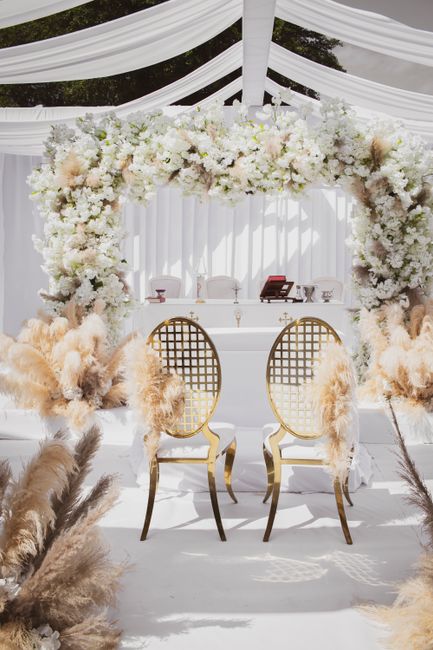
As a visual example, a compact arch framed with seasonal flowers can look more luxurious than a large one with too many competing details. A little restraint, done well, gives the eye somewhere to rest.
Case Study or Real-World Example
Here is a realistic scenario. A couple planning a small wedding near Pinner High Street wanted a flower arch for photos before the ceremony. At first, they imagined a wide statement piece right by the frontage because it looked beautiful in inspiration pictures. Lovely idea. But once the venue layout was measured properly, it became clear that the original plan would have narrowed access and made it awkward for guests arriving on foot.
Instead of pushing ahead and hoping for the best, the team reworked the idea. They chose a narrower freestanding arch, positioned it a little further inside the venue boundary, and used a denser floral design to preserve impact. The result looked elegant, stayed practical, and avoided any last-minute debate about permissions or access. Honestly, nobody missed the extra half-metre of width.
What made that setup work was not just the flowers. It was the decision-making. Early checking, a realistic footprint, and a willingness to adapt saved time and stress. The couple still got their photographs, and the arch still became one of the day's focal points. It just did so without borrowing trouble from the street outside.
That is often the real lesson with wedding arches in public-facing settings: the best result is usually a well-fit result. Not the biggest one. Not the fanciest one. The one that belongs there.
Practical Checklist
Use this checklist before you book or install anything:
- Confirm the exact arch location on a plan or photo.
- Check whether the space is private, shared, or public.
- Ask whether a permit or written approval is required.
- Measure the intended footprint carefully.
- Confirm access times for delivery, set-up, and removal.
- Agree who is responsible for installation and safety checks.
- Make sure insurance and risk details are in place if needed.
- Check the weather exposure and build a backup plan.
- Keep the design stable, tidy, and proportionate.
- Save all emails, approvals, and final notes in one place.
And one more, slightly human one: if anything feels unclear, ask again. It is much easier to ask a "silly" question in advance than to solve a real problem on the day. Wedding planning tends to reward the cautious.
Conclusion
Permits for wedding arches on Pinner High Street are really about three things: protecting access, keeping the setup safe, and making sure the decoration works with the space rather than against it. If you get those basics right, the rest becomes much easier. The arch can do its job beautifully, which is to frame the moment rather than dominate it.
Start early, measure properly, and treat approval as part of the design process rather than an annoying add-on. That mindset saves stress and usually leads to a better-looking result too. In the end, the best wedding setups feel effortless because someone did the careful work before the guests arrived. That is the quiet magic behind the scenes.
Get a free quote today and see how much you can save.
If you're still weighing up the right floral look for the day, it can help to explore the wider wedding range and compare styles before you commit. A little planning now makes the whole celebration feel calmer, kinder, and a lot more joyful when the time comes.
Frequently Asked Questions
Do I need a permit for a wedding arch on Pinner High Street?
If the arch or any part of its setup will sit on public pavement, shared frontage, or another area outside private control, a permit or formal permission may be needed. If it is fully inside a venue's private space, you may only need venue approval. The safest approach is to check the exact location early.
Who usually applies for the permit?
That depends on the venue and the arrangement, but it is often the couple's planner, venue manager, or supplier who takes the lead. In practice, the person closest to the installation details is usually best placed to coordinate it.
How far in advance should I sort the permission?
As early as possible. Weddings move fast, and permissions can take longer than expected if the setup affects public access or requires detailed information. Leaving it until the last minute is where stress creeps in.
Can a florist handle the arch installation as well as the flowers?
Some can, yes. Others prefer to handle the floral design while a separate installation team or venue crew manages the frame. It is worth asking directly, because not every florist offers the same service model.
What information will I usually need to provide?
Typically, you may need the location, measurements, installation timing, removal timing, a description of the structure, and details of how it will be secured. Insurance or risk information may also be requested, depending on the site.
What happens if the arch blocks the pavement or access route?
That is exactly the sort of issue permissions are meant to prevent. If the arch would restrict access, you may need a different position, a smaller design, or an alternative setup entirely. Better to adapt than to cause a problem on the day.
Are freestanding arches easier to approve?
Often, yes. A freestanding arch that stays within a private boundary is usually simpler than a structure that needs public space or ground fixings. But it still needs to be checked for stability and venue rules.
Can the weather affect whether I'm allowed to use the arch?
Weather can affect safety and practical approval, especially where wind may make the structure unstable. Even if permissions are in place, a supplier or venue may need to change the plan if conditions are poor. That is normal, not a failure.
Is a floral arch the only option for a wedding entrance on a high street?
No. You could use a smaller entrance arrangement, a framed floral feature, paired stands, or other decorative elements that create impact without taking up as much room. Sometimes a simpler feature works better in a tighter setting.
How do I avoid last-minute permit problems?
Check ownership of the space early, share a clear layout, ask about approval requirements in writing, and keep everyone aligned on timings. A tidy plan beats a dramatic rescue mission every time.
What if the venue says it is fine but I'm still unsure?
Ask for clarification in writing and request the exact boundaries or conditions if possible. Venue confidence is helpful, but the practical details still matter. If there is any doubt about public space, it is worth double-checking.
Can I combine wedding arch planning with other floral orders?
Yes, and that often makes sense. Coordinating the arch with bouquets, buttonholes, bridesmaid flowers, and table arrangements keeps the whole wedding style consistent. If the floral scheme is linked, the event tends to feel much more polished.